Deja Vu in purple: Bollywood can't quite quit Madhuri Dixit's 90s aestheticFrom Madhuri Dixit’s 1994 purple saree to Janhvi Kapoor’s 2026 lehenga: is it a tribute or a trend? Exploring the blurred lines of fashion.
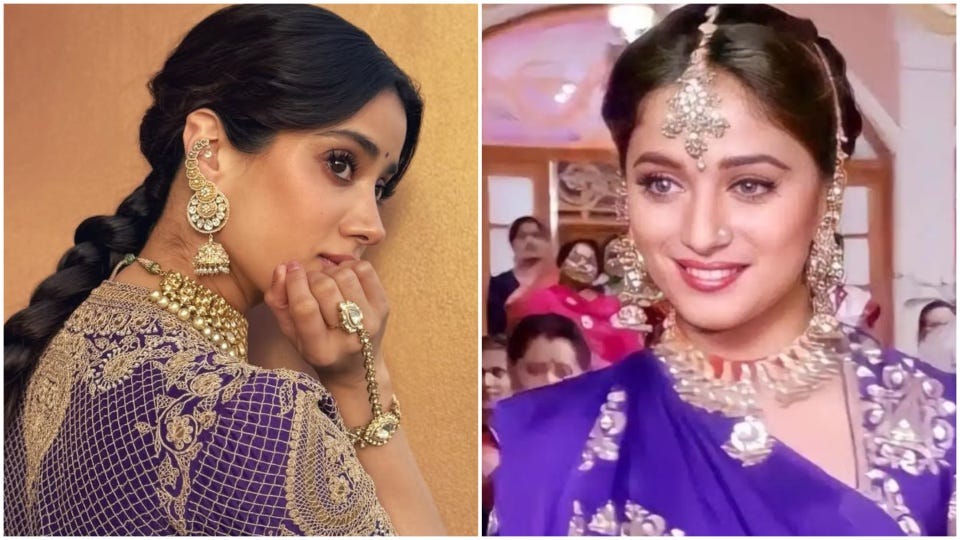
In the world of fashion, there is a recurring ghost in the machine: the ‘purple saree’. Long before Pinterest boards or celebrity stylists existed, Madhuri Dixit’s 1994 look from Hum Aapke Hain Koun..! rewrote the rules of the Indian wedding. Designed by Anna Singh, the saturated purple chiffon blouse with its ‘khidki (window)’ back was initially dismissed by critics as gaudy. Instead, it became a cultural monolith. Today, we aren’t just seeing its ghost; we are seeing its reincarnation. But as high-fashion houses and costume designers increasingly look backwards to move forward, the question arises: where does the ‘homage’ end and the ‘imitation’ begin?
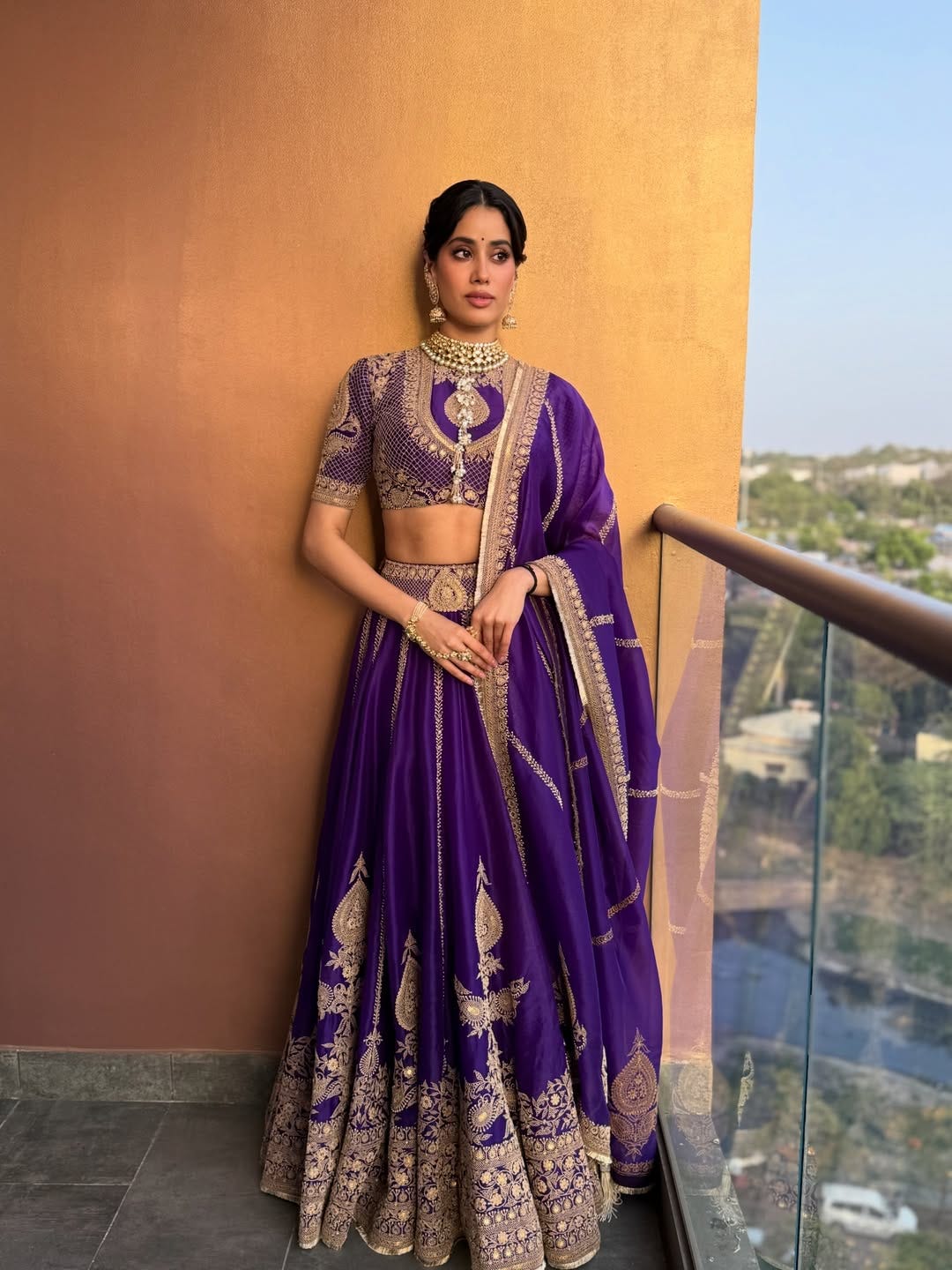
Janhvi Kapoor’s Madhuri connectionThis week in Bhopal, while promoting her upcoming film Peddi, Janhvi Kapoor stepped out in an Anamika Khanna lehenga. The colour — a deep, regal purple — and the intricate gold embroidery were an unmistakable nod to Madhuri’s iconic look from the song Didi Tera Dewar Deewana in Hum Aapke Hain Koun...! While the silhouette shifted from a saree to a lehenga, the spirit of the outfit remained the same. Even OG designer Anna Singh acknowledged the buzz. However, this isn’t an isolated event. In 2024, Deepika Padukone wore a jewelled purple Torani saree that required 3,400 hours of craftsmanship, and in 2025, Ananya Panday donned a Punit Balana saree that felt like a modern update to the same 90s blueprint. Back in 2024, Madhuri herself recreated her character Nisha’s look from Hum Aapke Hain Kaun in an embroidered saree. When a designer like Anamika Khanna — a titan of original craft — takes on this palette, it can perhaps be seen as a reimagining. She uses the ‘Madhuri purple’ as a foundation for her own complex signature in threadwork. In this case, the lines aren’t blurred; they are layered. It is a conversation between generations of Indian textiles.
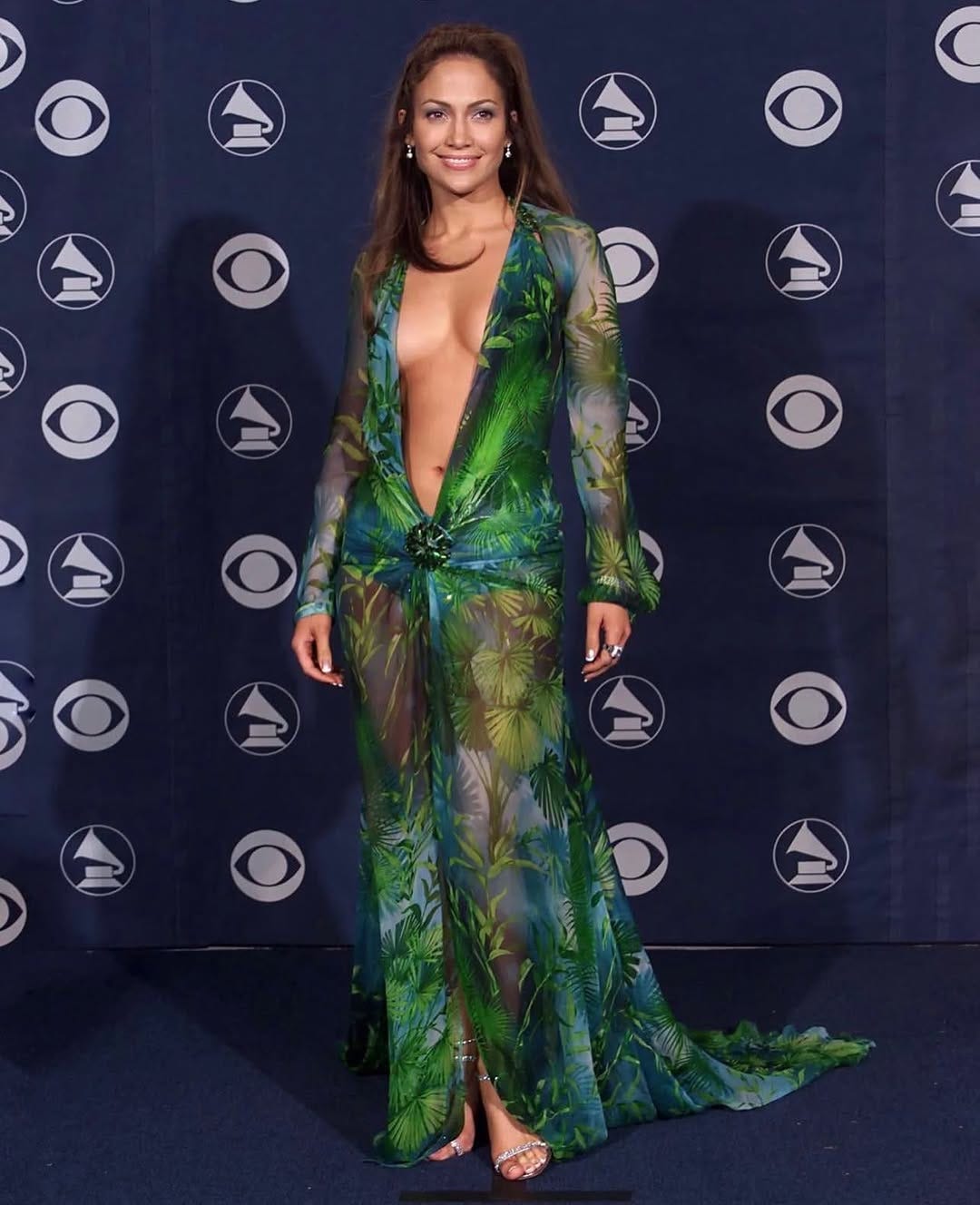
The global stage: Jennifer Lopez and the ‘jungle’ rebirthThe phenomenon isn’t localised to Bollywood. Take the ‘jungle dress’ — the Versace piece that literally birthed Google Images when Jennifer Lopez wore it in 2000. Recently, the look was recreated for the Prime Video series Off Campus. Costume designer Charlene faced the daunting task of fitting Mika Abdala in a version of the dress that felt authentic yet distinct. Here, the ‘copy’ is intentional and narrative-driven. Inspiration vs plagiarism: the nuanceSo, how do we distinguish between a dupe and a design? While a copy seeks to capitalise on the original’s success without adding value, an inspiration uses the original as a mood to create something new. When Torani spends thousands of hours on a saree, they aren’t copying a market replica of Madhuri’s saree; they are elevating a cultural memory into couture. Modern stylists now frequently tag the ‘OG’ inspiration in captions. By naming the source, they turn a potential ‘theft’ into a ‘tribute’. The fashion industry has always been a cycle of sampling, much like the music industry. In 2026, original ideas are rare, but original executions are everything. Whether it’s Janhvi Kapoor channelling the 90s in Bhopal or a costume designer recreating Versace for the screen, the goal isn’t to replace the original. The lines between imitation and fashion are blurred because, by nature, fashion is a shared language. As long as the craftsmanship honours the source rather than just mimicking the price point, the ‘purple saree’ and the jungle dress’ will continue to evolve, proving that a truly great look never really goes out of style — it just finds a new body to inhabit.
|